
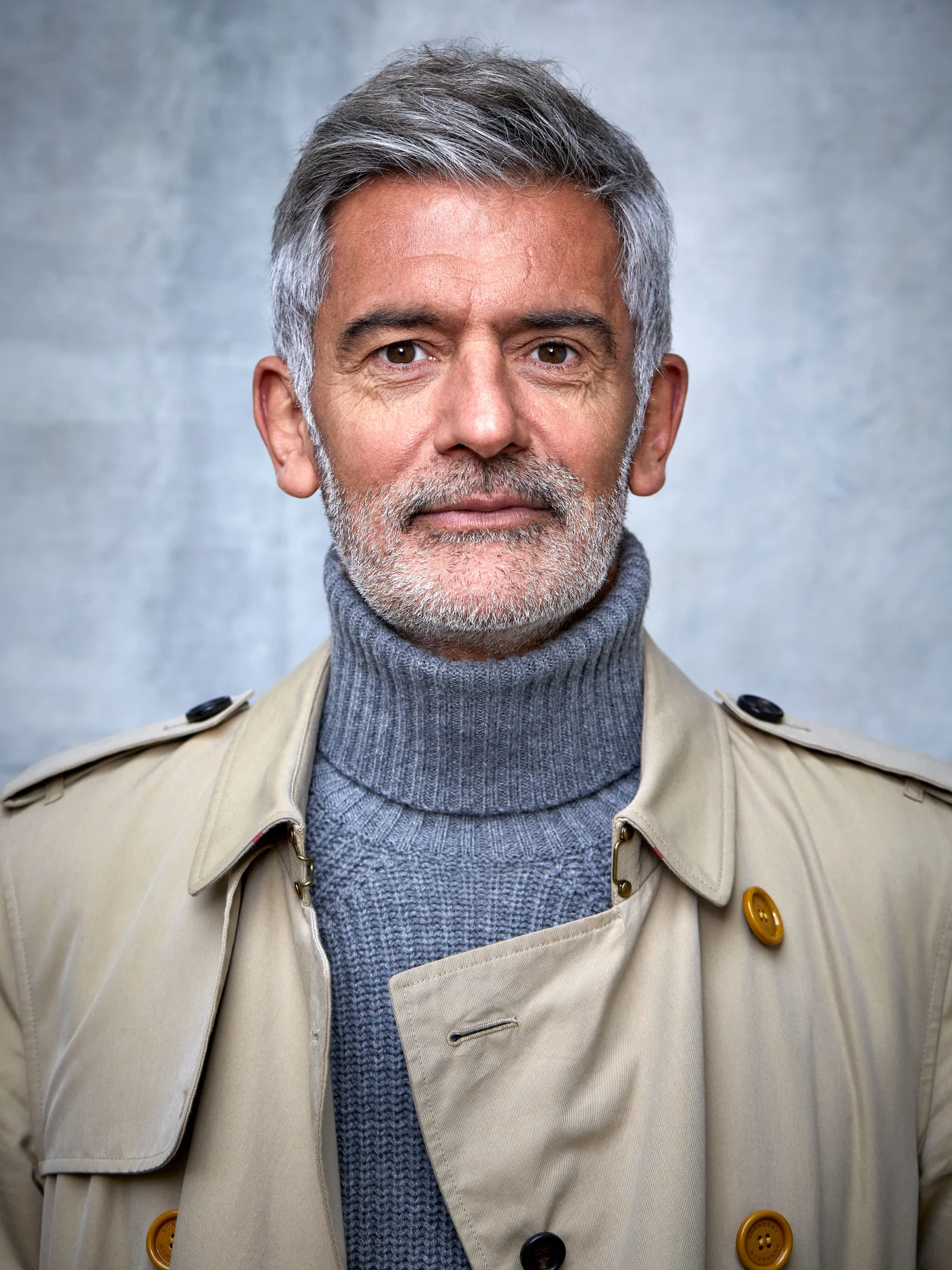
One may. Alfredo Häberli is never at a loss for answers. He is one of those people who can talk fascinatingly; listening to him is a pleasure, exchanging ideas with him a source of inspiration. For years his workplace has been an ever-same-sized loft near Zurich Tiefenbrunnen, where creativity is breathed without narrow-mindedness. Right now he’s tidying up, wants to part with things – too much has piled up. But every magazine he carries to the recycling pains him; every object was, at some point, an inspiration.
Decluttering, writing a book – you might think the Argentine-born designer is reviewing his life, has reached a turning point. But no: the book is simply one of his creative ideas. Those arise when there’s space for them, the mind free, when you’re not racing through life harried by appointments.
Such a situation arose when the Milan Furniture Fair, which Häberli visits every year with enthusiasm, was cancelled because of Covid. An empty week, unexpected, a hole in the diary. Häberli wondered how to fill those blank pages and remembered all the people he had met since 1986 in the design world: «As a young student you dream of one day working for names like Achille Castiglioni, Enzo Mari or Enrico Astori. Of my ten favourite firms, over the years I’ve ended up working for eight.»
He uses the suspended time and writes down all these personal encounters with his design icons – and there are many. «Verbally scribbled» is what he calls this part of his book. The other part is questions from people in the design scene: everyone had a wild card, could ask whatever they wanted, the thinker «had to» answer. He’s asked which superpower he’d like, whether we have too much beauty or how he would describe the unknown. His answers won’t be revealed here – it’s well worth reading the double book yourself.
Turned Towards the Next Generation
Häberli has always been a pleasant conversation partner: gives information gladly, engages in discourse, never seems arrogant, doesn’t trumpet his immense knowledge. Only his alert eyes and his expression betray when the other person is talking nonsense. Someone with so much style should be a role model for all design students – and indeed Häberli supervises the master’s programme at the FHNW Academy of Art and Design in Basel; the young people come to him in Zurich for it. «Basel made it possible for the students to come to my studio and for me to mentor them closely for days.» Ten years ago he already began supporting young Swiss designers with Atelier Pfister.
Freedom as a Commodity
With pleasing regularity you meet Häberli at the Concorso d’Eleganza at the Villa d’Este on Lake Como, where he soaks up the parade of classic coachwork. He has also worked with carmakers himself. «It’s always nice to make something with industry. For myself alone I wouldn’t do it – the fun only begins when you do it together, when you develop technology or experiment with a new technology.»
And the commercial side, the freedom within a commission? «You have restrictions, you have to find a solution within a limited freedom. You can build visionary projects – but building for real, within zoning rules and given conditions, that’s complex, and it fascinates me more. The car industry, however, wasn’t as great as I thought: the hierarchies, the kind of management, the blindness – it’s all opportunistic, it’s only about turnover.»
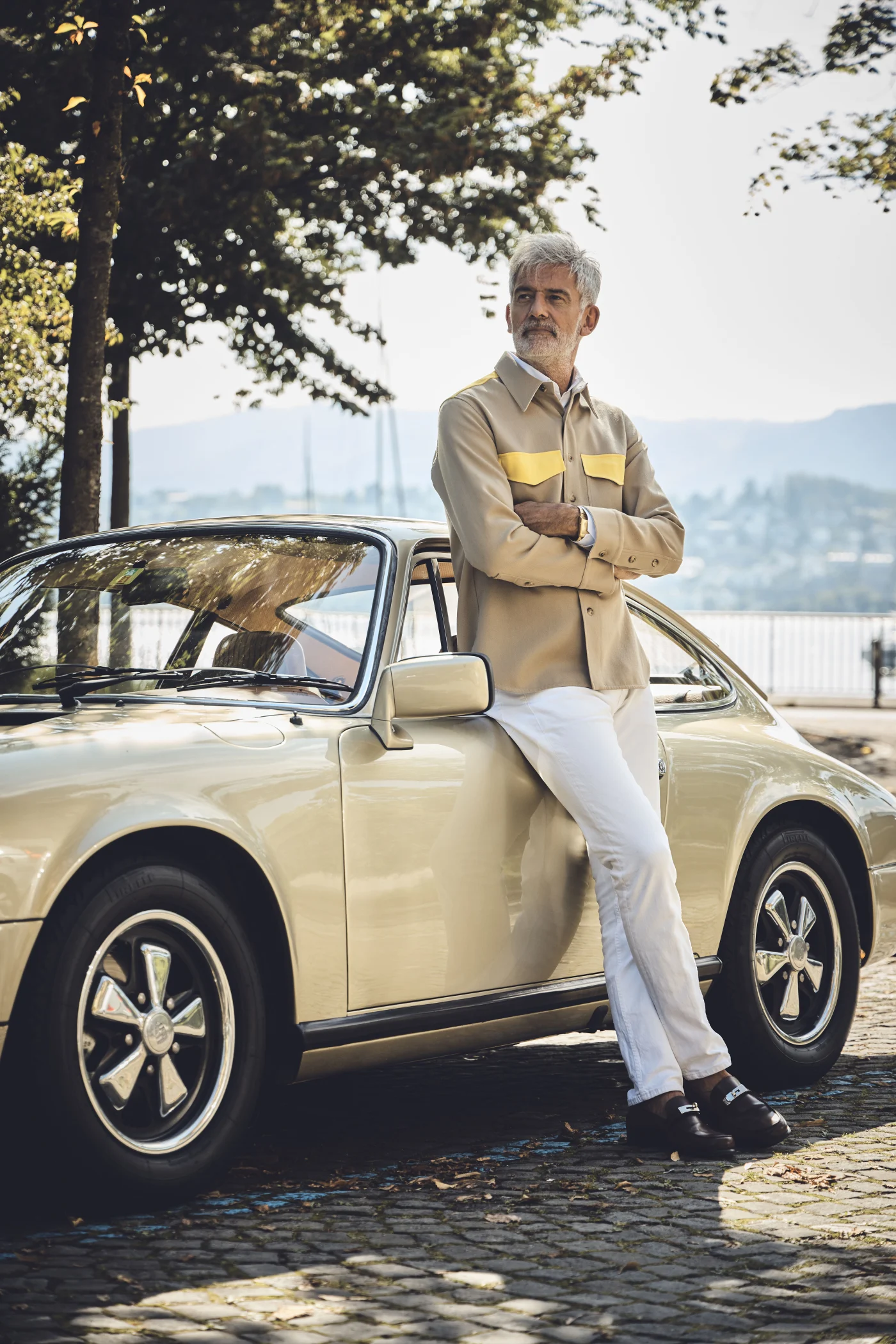
The big mistake of the car industry? «Building two-and-a-half-tonne SUVs that make no sense except to be sold dear. The latest project with a Porsche 356, by contrast – to grasp what it means to be clever – was exactly how I like it: with few means, few lines, little material, to achieve as much as possible. That corresponded one-to-one with Porsche’s attitude.» He likes Porsche privately too: he owns an old 911 in Platinum Diamond with cork and velour inside, plus a 928 in Oak Metallic and Sherwood Green.
Design With Punch
Finally, a sentence that explains how Häberli reaches his inspirations: «Observing is the most beautiful form of thinking. I need to observe in order to think. I have to see in order to have ideas. You need the gaze that doesn’t bump against limits.» Then he disappears briefly and returns with a brochure: «Why do golfers need 14 clubs? For ten years I’ve been working with the start-up Golfyr to revolutionise clubs – 100 per cent carbon, so light you can distribute weights inside; clubs that forgive mistakes because they correct themselves.»
Soon the set of six or seven clubs will be ready. It takes a long time to manufacture in Switzerland an invention that is created and designed here; the clubs are, he says, like Alinghi, as disruptive as can be. Anyone who wants to design something with Häberli should just ask him – but he has one premise: «It may sound brutal, but I only work for people I like. Not meant arrogantly, but: I like you, so we make something together.»
This article appeared in MEN issue 2/24 (November 2024).


