
This Friday morning the sun shines on the Domaine de Châteauvieux in the Geneva countryside, a stone’s throw from the French border. Below the Relais & Châteaux hotel restaurant the Rhône flows calmly, and the rolling hills in the distance form a soothing backdrop. It is here, amid this green oasis, that Philippe Chevrier works, the famous French-Swiss chef. In a warm dark-blue jacket, a large white apron and with a broad smile, the Genevan strides energetically into the Châteauvieux bar. He is a quarter of an hour late and apologises – but it doesn’t matter: the place is timeless and the Japanese green tea delicious. Tanned, relaxed and visibly slimmer, the 61-year-old radiates joie de vivre and seems positively rejuvenated. He has just returned from a family holiday in the Maldives – and dodged Covid: “My wife and son had it, I didn’t. And heaven knows how many customers I kiss in greeting!” Blessed by Saint Lawrence? In any case, Chevrier fell into the cauldron of good cooking as a small boy.
Cooking to Bring People Together
As he recalls, it was his mother who, when he was seven, made him want to become a chef. “She was a housewife and an excellent cook, like her mother and sister. At home there was always a starter, a main course and a dessert, never anything pre-made. She gathered the whole family around the table. From a small boy I was fascinated: I knew that if I could cook, I would bring people together.”
At the tender age of 15, Philippe began his apprenticeship at the Chat-Botté restaurant of the renowned Beau-Rivage hotel in Geneva. He then gathered experience in various establishments: as commis, chef de partie, trainee in a bakery, then in a chocolate factory and a confectionery. “The boss I wanted to be like was the confectioner Eric Chevillat – a very hard worker and a deeply humane professional. Our profession is 90 per cent work and 10 per cent talent.” Today he too tries to pass on his passion: “You have to make young chefs, who sacrifice their weekends and evenings, want to be there. They should want to take my place.” And what does he think of shows like Top Chef? “They make young people dream, but when they enter the profession they grow disillusioned. The reality is a very long apprenticeship before you stand in the limelight.”

His brigade consists of 14 cooks, two of them women. “Women think hard before taking up this profession – the hours are difficult to reconcile with family life. I like working with them because they are very meticulous. If they are good, it’s a spur for the lads: if she can do it, so can I.” Chevrier compares his role to that of a locomotive, even on days when things go less well. “You mustn’t feel sorry for yourself, you have to get going! I have to give my team and the guests a positive image. The guests come here to switch off and have a good time. A restaurant should give its guests pleasure.” Chevrier has run up to fourteen restaurants; today he has six. Among them Chez Philippe, which in the steakhouse tradition offers a wide range of grilled meats, and Denise’s Art of Burger, with creative gourmet burgers – a tribute to his mother, who was called Denise.
His Passion? Bourgeois Cuisine!
Although the Genevan visits his establishments every day – he has delegated their running to staff – the heart of his work is clearly Châteauvieux. Far from passing fashions, he describes his cuisine as bourgeois, with a solid meat base. He is convinced there will always be takers for a good poularde with truffles or roasted on the spit. And even as a chef evolves, the original DNA must remain – and for him, the DNA is the product. “I have always worked with products such as lobster or line-caught sea bass from Brittany, woodcock from Scotland, Bresse poultry, and the truffle I adore, especially the one from the Vaucluse. You can’t find all these within 50 kilometres. But I also showcase regional products, such as the pork from Jussy or the poultry from Satigny.”
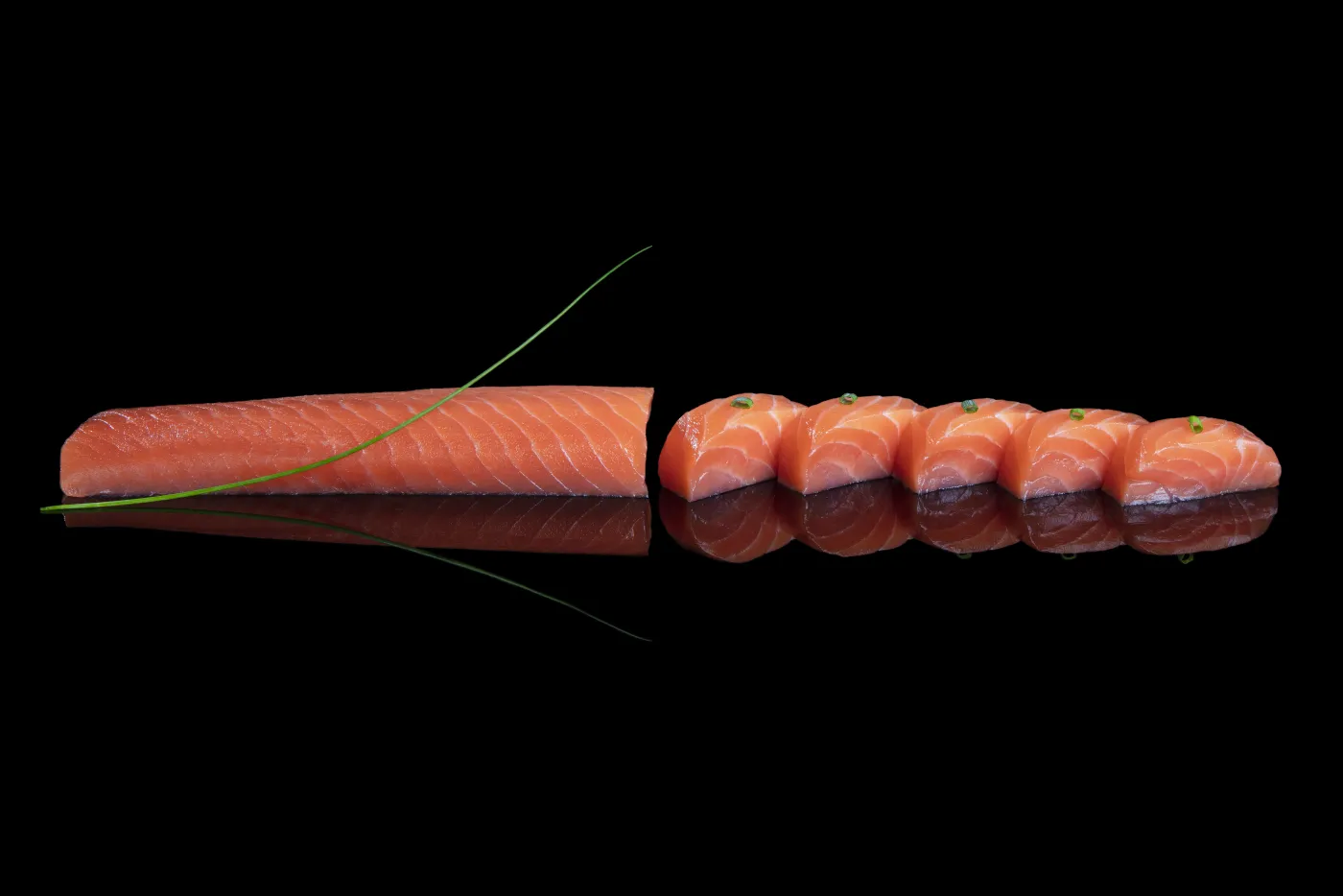
Thus arise small culinary masterpieces such as cannelloni of marinated Scottish salmon with brown crab, pink grapefruit jelly and caviar, or filet mignon, sweetbreads and cromesquis of Alpine veal with roasted cardoons, ravigote sauce, a jus with black Vaucluse truffle and potato mousseline.

Of Chevrier’s cuisine, the food journalist Jean Lamotte writes: “It has changed subtly: a kind of turn towards spices once rarely used. One detects fragrances from the Maldives, the Mascarenes, Japan, China, even Indonesia, whose appearance is relatively recent. The dishes have subtly gained colour.”
How does the Genevan deal with criticism? “It’s important to be in the guides, even with a low score, because they are the bible of food lovers. Anonymous reviews on the internet, on the other hand, mean nothing. My team and I know what we do and what we are worth. The hardest thing in our profession is consistency.”
And although Chevrier’s daily life often resembles a marathon, two people give him strength and energy: his wife and his son. “They are my driving force. My wife, sixteen years younger than me, is my fountain of youth.” No wonder the man in his sixties doesn’t think of retirement for a second. “Some ask me when I’ll stop. Do you ask a painter that? My profession is fascinating, I meet so many people. And to cook is to love.”
This article appeared in MEN issue 1/22 (May 2022).